
Roof maintenance means routinely inspecting and fixing small issues to prevent big ones. It protects your home from leaks, heat loss, and structural wear. Whether your roof is sloped or flat, made of tile, metal, or fibre cement, regular upkeep keeps it safe, energy-efficient, and long-lasting.
Technically, it involves:
- Surface checks to spot cracks, UV damage, or corrosion
- Seal inspections to keep water out
- Drainage checks to avoid water pooling
- Thermal protection to retain indoor comfort
Even a basic roof maintenance checklist can reduce repair costs and extend roof life by 10–15 years. Skipping it, on the other hand, can minimise roof performance.
10 Simple Yet Essential Tasks To Maintain Your Roof
Now let’s get hands-on with the technical and practical steps. These 10 tasks help manage airflow, water resistance, and surface protection—core components of good roofing and maintenance. Whether you’re maintaining a tiled sloped roof or an Everest fibre cement corrugated roof, these tasks apply across the board.
Now that you know what roof maintenance involves and why it’s critical, let’s break it down into actionable steps. These 10 tasks cover both visible and hidden parts of your roof and address physical, thermal, and moisture protection. Whether you’re doing DIY checks or hiring help, these are must-haves in any roof maintenance checklist.
Let’s dive into the 10 most essential tasks every good roof maintenance checklist should include.
1. Clean Gutters
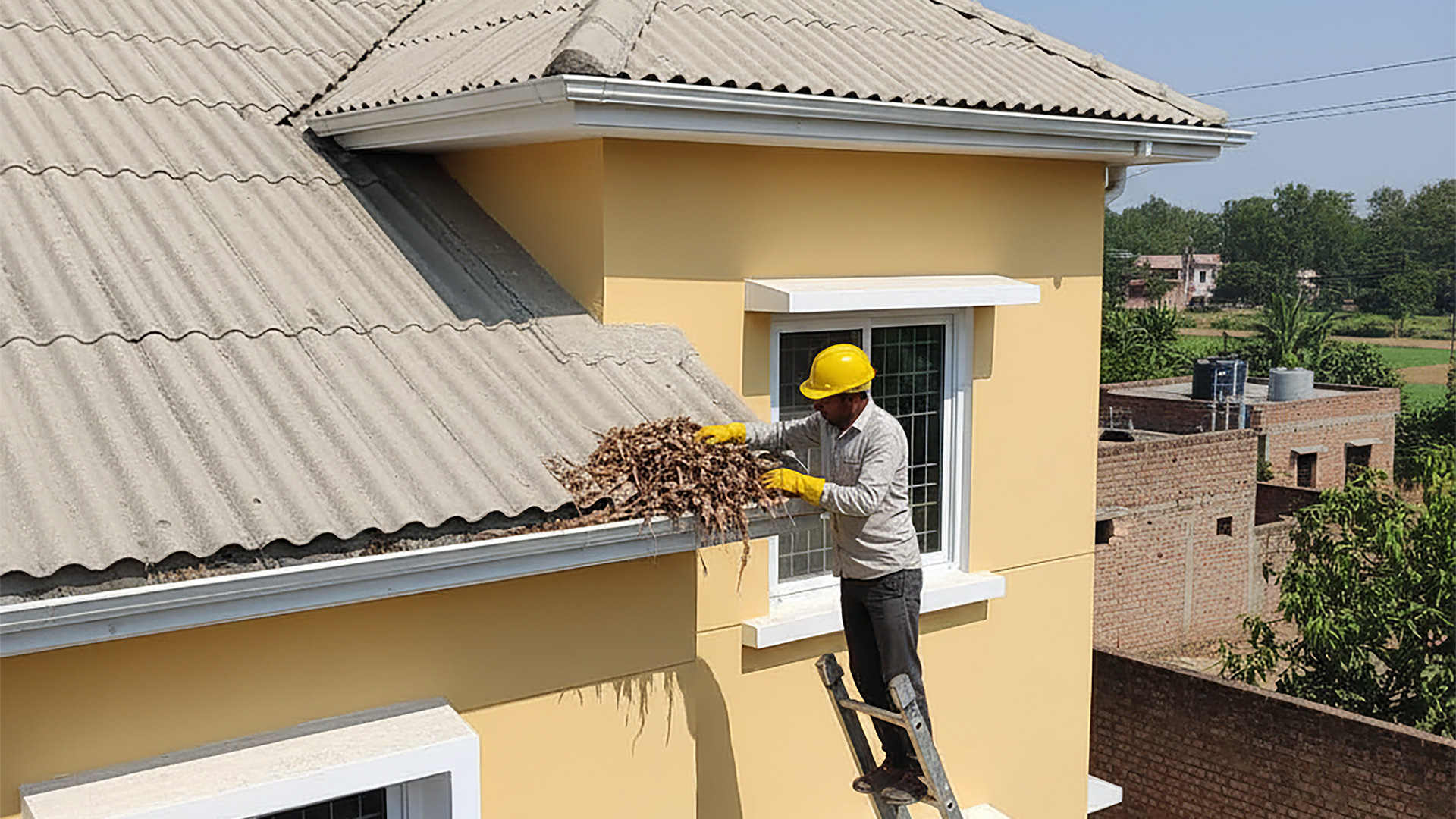
Gutters are the drainage highways for your roof. If they’re blocked, water can overflow and seep inside your walls.
Task: Clean gutters twice a year, before and after the monsoon. Remove leaves, mud, nests, or any trapped debris.
Tip: Use a gutter scoop and garden hose to flush the system. Consider installing gutter guards to minimise clogging in leafy areas.
2. Limit Moss & Algae Growth
Moss and algae thrive on shaded, damp rooftops, especially in coastal or high-humidity regions. They trap moisture, leading to surface deterioration or slippery patches on sloped roofs.
Task: Apply a water-vinegar mix (or diluted bleach solution) and scrub with a soft brush. Don’t use a pressure washer—it can loosen roofing material.
Tip: Install zinc or copper strips under ridge tiles; rainwater will carry ions that naturally deter regrowth.
3. Remove Tree Branches
Overhanging branches can rub against the roof and cause damage. During strong winds, broken branches may fall and crack tiles or put holes in sheets.
gouge
Task: Trim back branches to maintain a 6–8 foot clearance from your roof. Clear fallen twigs, pods, and fruits after storms.
Tip: Use a pole pruner or call a tree expert. Always trim during dry weather to reduce the chance of fungal spread.
4. Inspect Ventilation
Without proper ventilation, your attic turns into a trap for heat and humidity, which accelerates shingle ageing and encourages mould.
Task: Check if the ridge vents, gable vents, or soffit inlets are clear. Look for signs of condensation or a musty smell.
Tip: Install static or turbine ventilators to create passive airflow.
5. Clean Organic Debris
Debris like dry leaves, seed pods, and dust piles up near joints and valleys, holding moisture against your roof and leading to microbial growth or corrosion.
Task: Use a soft broom or blower to clear all debris at least once per season.
Tip: For flat roofs, pay extra attention to corners and around HVAC units. These are moisture traps if left unchecked.
6. Check Cladding and Windows for Leaks
Joints between the roof and vertical walls or skylights are often weak points. Water ingress here can silently damage wooden framing, insulation, or interior walls.
Task: Inspect silicone seals, cladding overlaps, and any window flashing. Look for signs of cracking or fungal stains.
Tip: Apply waterproof polyurethane sealant yearly to extend protection.
7. Check Flashing
Flashing, often made of metal or composite, is used around chimneys, vent pipes, and junctions to direct water away from vulnerable areas.
Task: Check for rust, uplifted edges, or gaps. Flashing damage is a leading cause of slow leaks.
Tip: Upgrade to factory-finished, corrosion-resistant options like Everest Hi-Tech roofing profile sheets, which offer long-term weather resistance and clean integration.
8. Check Roof Condition
Cracks, corrosion, colour fading, and physical deformation are visual signs that your roofing material may be compromised.
Task: From a ladder or terrace edge, inspect the full span. Tap gently on fibre cement sheets to detect hollowness, a sign of internal wear.
Tip: Replace worn sheets with high-durability Everest colour-coated options, which are UV-stable and suitable for diverse Indian climates.
9. Check Boot Cracks
Boots (seal collars) cover plumbing vent pipes that penetrate the roof. Over time, they can dry, crack, or shift out of place.
Task: Look for visible splits or loosened collars. Water dripping near pipes is often due to boot failure.
Tip: Replace rubber boots every 7–10 years or coat them with UV-resistant paint to delay wear.
10. Check for Pests
Birds, squirrels, and insects can damage insulation, wiring, and even gnaw through roofing material.
Task: Look for nests, holes, or droppings in corners, under eaves, and in attic spaces.
Tip: Block access points and use humane repellents. Regular maintenance deters nesting.
11. Check Expansion Joints
In larger structures, expansion joints are used to absorb thermal movement. These can degrade with time and cause seepage.
Task: Inspect joint cover plates and sealant lines for gaps or tears.
Tip: Hire professionals to reseal these with flexible weatherproof materials.
12. Monitor Solar Panel Mounts
Rooftop solar installations are growing across India, but the mounting structures can loosen or create points of leakage if not sealed properly.
Task: Ensure mounts are tightly secured and no rusting or water seepage occurs around screws.
Tip: Use weather-sealed anchors and check the structure after every major storm.
13. Check Roof Paint Condition
In high-UV areas like Rajasthan or coastal zones, roof coatings can fade or chalk quickly, reducing heat resistance.
Task: Look out for faded patches or a powdery surface—these are signs that re-coating is needed.
Tip: Use heat-reflective or UV-resistant paints, such as those compatible with Everest colour-coated sheets.
Monitor Paint
Be Roof Ready Always
Just like brushing your teeth or servicing your car, roof maintenance is a habit that saves you time, money, and headaches down the line. A few hours every year spent on your roof maintenance checklist can add years to your roof’s life.
Whether you live in a rainy coastal city or a dry interior region, understanding how to maintain roof health helps avoid costly repairs and keeps your family safe. For long-term roofing solutions that pair well with your maintenance efforts, check out Everest’s advanced roofing materials. Designed for durability, their roofing sheets and accessories support easy upkeep and better resistance to weather.
FAQ
1. What kind of maintenance does a roof need?
Cleaning gutters, checking flashing, removing debris, and inspecting for leaks are all part of good roof maintenance.
2. How do I take care of my roof?
Follow a regular roof maintenance checklist. Look for moss, debris, leaks, and structural issues. Clean and repair as needed.
3. Why is it important to maintain your roof?
Regular roofing and maintenance helps prevent costly repairs, improve energy efficiency, and increase your roof’s lifespan.
Link: https://www.grandviewexteriorsystems.com/blog-posts/enhancing-energy-efficiency-through-roof-maintenance?utm
https://roofchoicetn.com/how-roof-insulation-affects-energy-efficiency/?
https://bradsmithroofing.com/residential-roofing/the-benefits-of-energy-efficient-roofing/?utm
4. How often should a roof be maintained?
Inspect your roof at least twice a year—ideally before and after monsoon. After any major storm, do a quick check.
5. How do I clean my roof?
Use soft brushes or low-pressure water to remove moss and dirt. Avoid harsh chemicals or high-pressure washers.
6. What is the maintenance of a roof?
It involves regular inspection, cleaning, and small repairs. From clearing gutters to checking flashings, roof maintenance ensures long-term performance.