
Choosing the right wall material comes down to more than just looks; it’s about durability, cost, moisture resistance, and installation ease. A major comparison in this arena is fibre cement board vs gypsum board; each excels in different ways. You’ve likely heard that fibre cement boards are tough and weather-resistant, while gypsum boards (commonly called drywall or plasterboard) are lightweight and budget-friendly. But when you examine them closely, the real differences lie beneath the surface. This guide will explore each material clearly and simply, helping you decide based on your space’s needs.
Here are the key factors to consider when choosing between fibre cement board vs gypsum board.
What is Fibre Cement Board
Characteristics and Composition
Fibre cement board is a robust composite made from cement, silica, and reinforced with cellulose or fibreglass fibres. It typically comes in varying thicknesses, ranges from ¼″ to over ⅜″, and can be dense and heavy. Some variants are engineered to be waterproof, not just moisture-resistant.
Applications
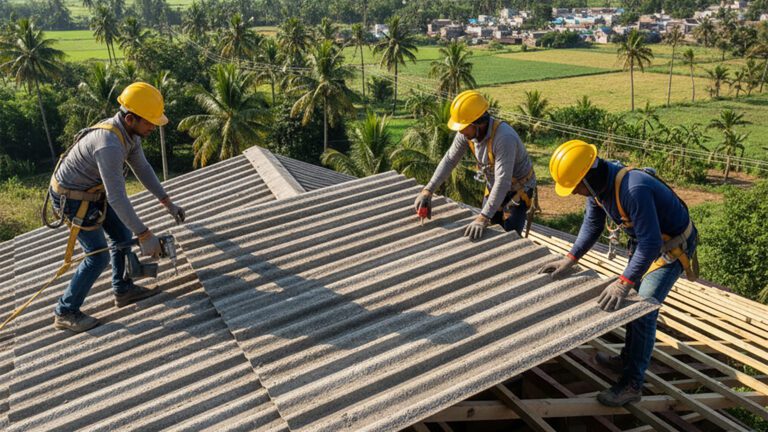
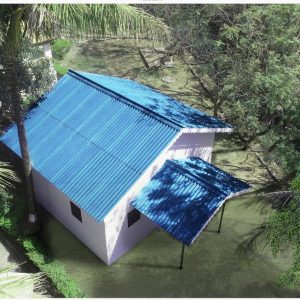
Because it resists moisture, rot, mildew, and pests, fibre cement board is ideal for exterior cladding, bathroom and kitchen walls, tile backer-boards, and ceilings in damp areas.
Benefits
- High durability & impact resistance – it stands strong against dents and stress.
- Outstanding moisture resistance – suited for wet environments.
- Excellent fire rating – non-combustible and often Class A rated
- Termite and pest proof – doesn’t rot or get eaten.
What are Gypsum Boards
Characteristics and Composition
Gypsum board (drywall/plasterboard) features a gypsum plaster core encased in paper or fibreglass facing. It’s lightweight and easy to cut with a utility knife.
Applications
Widely used for interior partitions and ceilings, gypsum boards are a popular choice in living rooms, bedrooms, offices, and other dry indoor areas.
Benefits
- Budget-friendly – generally the less expensive option.
- Simple to install & finish – easy cutting, taping, mudding, sanding, and painting.
- Fire-resistant options available – Type‑X/C panels contain glass fibres to resist fire.
- Smooth, clean finish – perfect for painted walls and ceilings.
Fibre Cement Board vs Gypsum Board
Durability and Moisture Resistance
Fibre cement board vs gypsum board—Fibre cement outperforms in sustained moisture conditions; won’t warp, swell, or soften when wet. Gypsum board can resist brief exposure, but prolonged dampness leads to sagging and mould.
Strength and Impact Resistance
Fibre cement board is noticeably more impact-resistant and less prone to denting. Gypsum boards are more easily damaged by knocks and pressure.
Fire Resistance
Both have good fire resistance. Gypsum absorbs heat via its bound water, while fibre cement is non-combustible and often meets high fire ratings.
Ease of Handling and Installation
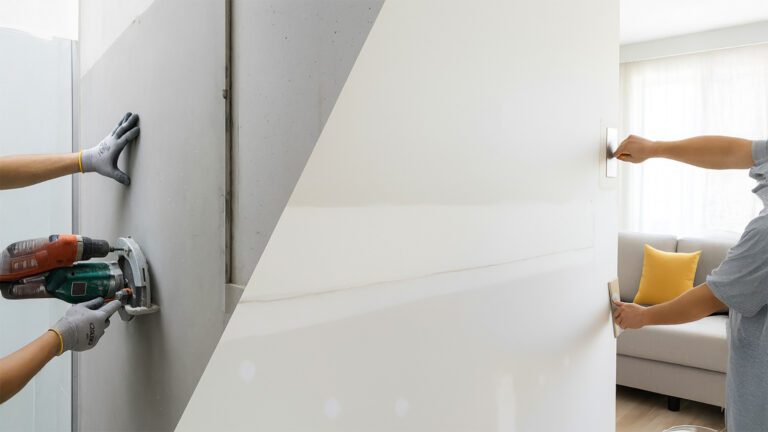
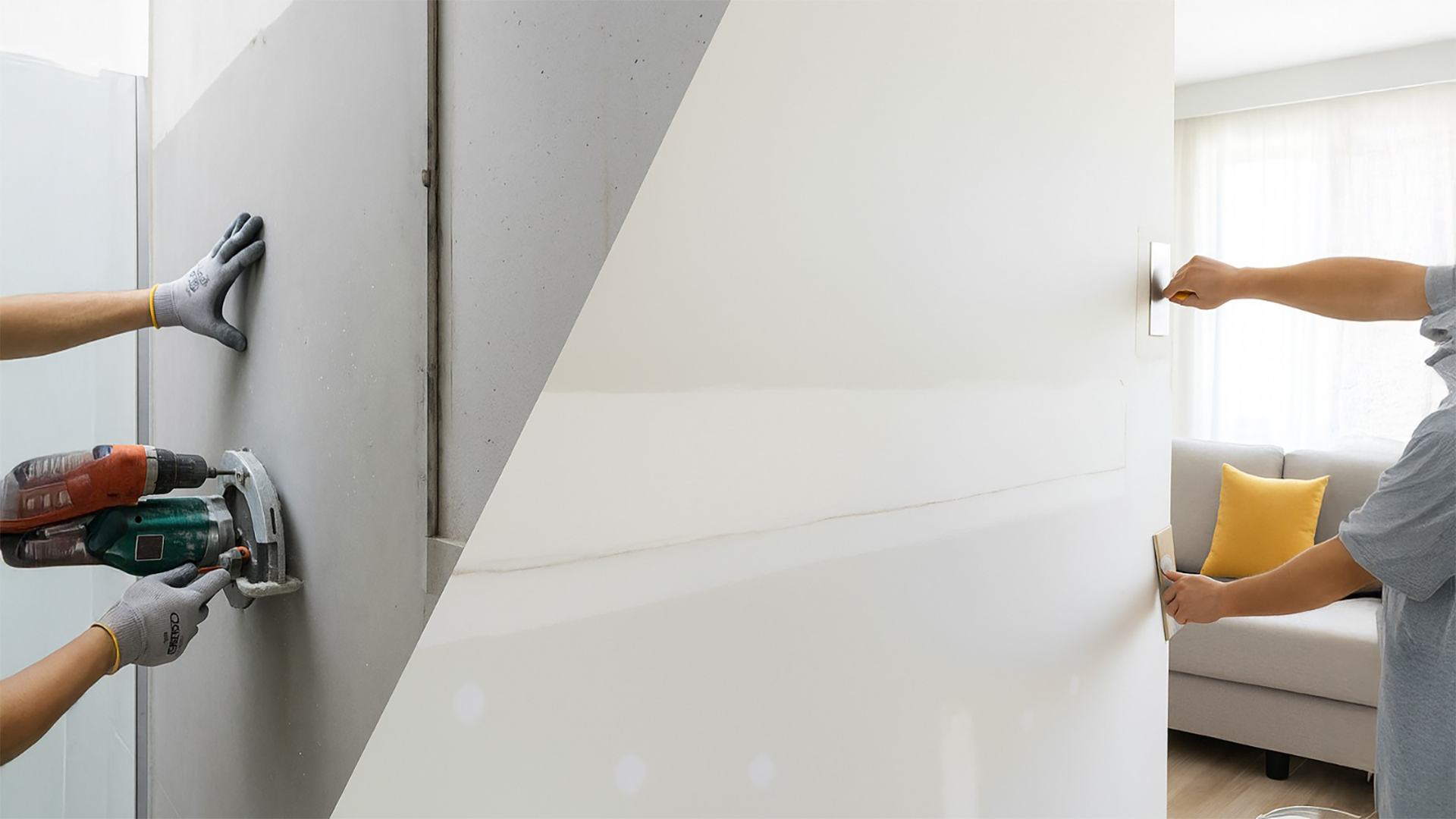
Gypsum board is light, easy to cut, and DIY-friendly. Fibre cement is heavy, needs carbide blades, pre-drilling, and professional installation.
Versatility
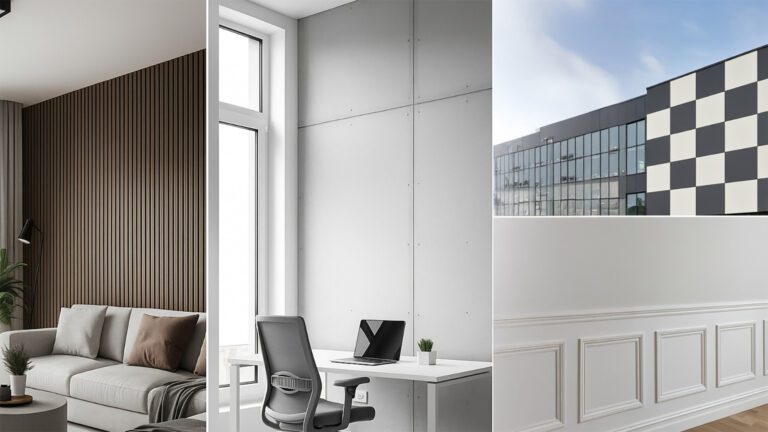
Gypsum is ideal for smooth painted finishes and flexible designs, including curved shapes. Fibre cement offers surface variations, smooth or textured, but is less suited for curves and needs extra finishing for polished interiors.
Cement Sheet vs Gypsum Sheet: Choosing the Right Board Type
The cement sheet vs gypsum sheet decision hinges on environment and load needs:
- Cement sheets (fibre cement/cement board) are best for moisture-prone, impact-prone, or structural areas like bathroom walls, exterior cladding, and under tile.
- Gypsum sheets shine in indoor, dry environments, living room walls, bedroom partitions, and ceiling finishes. They’re easy to finish and cost-effective.
Cement Board vs Drywall Cost
Upfront Material Cost
Gypsum drywall is generally the more affordable option, costing less per sheet than fibre cement board. It’s widely available and often preferred for cost-sensitive interior projects.
Installation Cost
Drywall is quicker to install, requiring basic tools and minimal labour. Fibre cement, on the other hand, is heavier and needs specialised tools and trained installers, which increases labour time and cost.
Long-Term Value
While fibre cement board has a higher upfront cost, it offers greater durability in moisture-prone or high-impact areas. Drywall may be more cost-effective in dry, low-traffic interiors, but it can require repairs or replacements over time.
Fibre Cement Drywall vs Gypsum Drywall
When comparing fibre cement drywall vs gypsum drywall, the choice aligns with location and performance:
- Fibre cement drywall offers longevity in wet, high-impact, or exterior conditions, ideal under tiles or cladding.
- Gypsum drywall serves everyday indoor needs with ease and elegance on painted surfaces.
What Is Drywall? Understanding Types & Benefits
Choosing the Right Wall Material
So, whether you’re planning a tiled bathroom, a calm bedroom, or a hard-working utility wall, understanding the pros and cons of different wall materials will help you make an informed choice. If you’re weighing fibre cement board vs gypsum board, consider where and how the board will be used. For areas exposed to moisture or heavy use, fibre cement holds up impressively. For clean, smooth interiors, gypsum drywall often does the job well, especially when timelines and budgets are tight.
And if you’re comparing cement board vs drywall cost, remember to factor in both the upfront price and the long-term durability, because choosing between both isn’t just about what’s cheaper, it’s about what will last and perform best in your specific environment.