
Metal roofs are a common choice for industrial, commercial, and residential buildings. They are sturdy, cost-effective, and easy to install. But over time, even the toughest metal roof starts to show wear. The problem is that most building owners wait too long before acting, and by then, the damage has already spread.
Knowing when to replace a metal roof can save you from costly structural repairs down the line. Here are seven clear signs that it is time to make the switch.
Understanding Metal Roofing Lifespan
Metal and fibre cement roofing sheets are known for their durability, often lasting between 30 to 50 years. However, metal roofing sheets corrode easily when exposed to water, salt-laden air, chemicals, or industrial vapors and need to be replaced at regular intervals.
In contrast, fibre cement roofing sheets do not corrode and have a minimum durability of 40 years. During summers, metal roofing sheets tend to heat up significantly, and in the rainy season, they make considerable noise. These are inherent limitations that shorten the effective lifespan of metal roofs in harsh environments.
Did You Know?
Everest Industries Hi-Tech cement roofing lasts up to 3x the lifespan of standard metal sheets while requiring minimal maintenance throughout its service life.
Why Timely Metal Roof Replacement Matters
Delaying metal roof replacement leads to bigger problems. Once corrosion sets in, it spreads fast. Water seeps through rusted panels, damaging insulation, structural supports, and interior walls. In industrial settings, a compromised roof can increase operational downtime and safety risks.
Replacing a deteriorating metal roof on time protects the building structure, improves energy efficiency, and reduces long-term maintenance costs. It is always more cost-effective to replace proactively than to repair repeatedly.
7 Signs You Need Metal Roof Replacement
1. Visible Rust and Corrosion
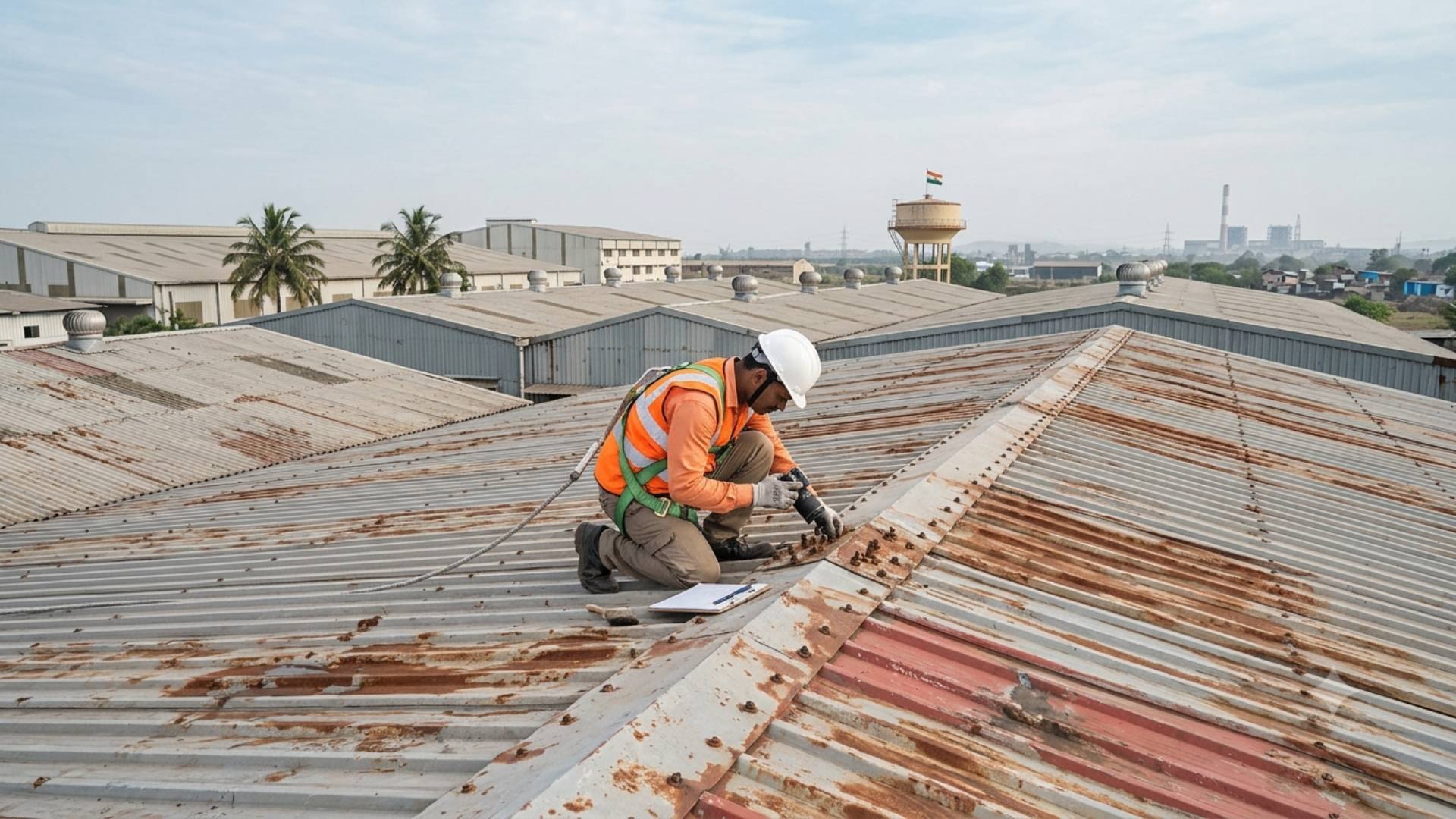
One of the most common roof replacement signs is visible rust and corrosion on the surface. Metal roofing corrodes when exposed to water, moisture, and chemicals. Once rust appears, it weakens the structural integrity of the sheet. Widespread corrosion is a clear signal that the roof has reached the end of its useful life.
2. Frequent Leaks
If you are constantly dealing with water ingress during the rainy season, your metal roof is no longer doing its job. Repeated leaks mean the material has degraded past the point of repair.
3. Excessive Heat Inside the Building
Metal roofs absorb and transmit heat, causing interior temperatures to spike during summer. If your cooling costs have gone up noticeably, the roof’s thermal performance has declined. Fibre cement alternatives offer low thermal conductivity, keeping interiors cooler without additional insulation.
4. Loud Noise During Rain
Metal roofing makes considerable noise during rainfall. Over time, as sheets loosen or warp, the noise gets worse. If rain sounds have become disruptive, it is a sign the roof needs attention.
5. Warping or Bent Panels
Metal sheets warp and bend under prolonged heat and weather exposure. Warped panels create gaps that let in water and reduce the roof’s load-bearing capacity. This is a structural issue that cannot be fixed with simple repairs.
6. Corrosion in High-Moisture or Chemical Environments
For industrial facilities such as chemical plants, pharmaceutical units, food processing units, and coastal locations, metal roofs deteriorate much faster. Salt-laden air and chemical vapors accelerate corrosion significantly. If your facility falls in any of these categories and the roof is showing wear, replacement is the only long-term solution.
7. Rising Maintenance Costs
Knowing the roof replacement signs early can also save you money. If you are spending more on patching, repainting, and rust treatment year after year, the cumulative cost adds up fast. At a certain point, continued maintenance on a deteriorating metal roof costs more than a full replacement with a more durable material.
When to Replace Metal Roof Systems
Timing matters. The best time to replace a metal roof is before it fails completely. Watch for two or more of the signs above appearing together, as that usually means the roof is in advanced decline.
For industrial and manufacturing environments dealing with high corrosion, high moisture, or chemical exposure, replacement should happen sooner rather than later. Facilities like ports, pharma plants, food processing units, and agro industries benefit from switching to non-corroding alternatives that are better suited to those conditions.
Ready to Upgrade Your Roof?
Tired of recurring metal roof repairs? Everest Industries offers advanced roofing solutions built for durability, low maintenance, and superior weather resistance. Explore Everest Industries Roofing Solutions and find the right fit for your building.
How to Extend Metal Roofing Lifespan
If your metal roof is still in reasonable condition, a few practices can help extend its life before replacement becomes necessary.
Keep the roof surface clean and free of debris that traps moisture. Inspect it after heavy rain or extreme weather to catch early signs of rust or damage. Ensure proper ventilation underneath the roof to reduce condensation buildup. Address minor leaks and loose fasteners quickly before they develop into larger problems.
That said, these measures only delay the inevitable for a metal roof in an aggressive environment. They are not a substitute for replacement when the structural integrity is already compromised.
Factors to Consider Before Replacing a Metal Roof
Before committing to a replacement, consider the environment your building is in. Coastal regions, chemical facilities, and areas with heavy rainfall demand materials with non-corroding and high chemical resistance properties.
Think about thermal performance. Metal roofs absorb and retain heat. Switching to a material with low thermal conductivity can improve indoor comfort and reduce energy costs significantly.
Consider noise levels. If the building is used for work, storage of sensitive goods, or habitation, a quieter roofing material with good sound absorption will add measurable value.
Finally, factor in long-term maintenance requirements. A roof that is maintenance-free over its lifespan is always a better investment than one that demands regular upkeep.
FAQs
What are the signs of metal roof replacement?
Visible rust, frequent leaks, warping panels, excessive interior heat, loud noise during rain, and rising maintenance costs are all signs that a metal roof needs to be replaced.
When should a metal roof be replaced?
A metal roof should be replaced when it shows persistent corrosion, repeated leaks, or structural damage that repairs can no longer fix, typically after 30 to 50 years depending on the environment.
Can a damaged metal roof be repaired instead of replaced?
Minor damage like loose fasteners or small leaks can be repaired, but widespread corrosion, warping, or structural deterioration require a full replacement for long-term protection.
How can I increase the lifespan of a metal roof?
Keep the roof clean, inspect it regularly after extreme weather, ensure proper ventilation, and address minor rust or leaks early before they escalate into bigger structural issues.